Dharmendra: Bollywood’s He-Man – Fadnavis’ Emotional Tribute to the Eternal Hero
Bollywood lost one of its brightest stars on November 24, 2025, when legendary actor Dharmendra passed away at 89. The news sent shockwaves through India, with tributes pouring in from fans, filmmakers, and leaders alike. Among the most heartfelt came from Maharashtra Chief Minister Devendra Fadnavis, who called Dharmendra “the dazzling star who lit up the golden era of Hindi films” and “the man who redefined the role of the hero.”
Fadnavis’ words captured the essence of a career that spanned over 65 years and more than 300 films. From the dreamy-eyed lover of the 1960s to the unstoppable action hero of the 1970s and ’80s, Dharmendra wasn’t just an actor – he was a phenomenon. Known as Bollywood’s original “He-Man,” he embodied strength, charm, and vulnerability in equal measure, making him a favorite across generations.
A Humble Beginning to Superstardom
Born Dharam Singh Deol on December 8, 1935, in Phagwara, Punjab, Dharmendra’s journey to stardom was the stuff of dreams. Coming from a modest Sikh family, he moved to Bombay (now Mumbai) in 1959 with little more than hope. His breakthrough came with the 1960 film Dil Bhi Tera Hum Bhi Tere, but it was Phool Aur Patthar (1966) that made him a household name.
Early roles showcased his romantic side – opposite beauties like Meena Kumari in Phool Aur Patthar and Asha Parekh in Aadmi Aur Insaan. These films highlighted his boyish charm and expressive eyes, earning him the title of “romance king.” But Dharmendra’s true magic was his versatility. He could shift from soft ballads to high-octane action without missing a beat.
The He-Man Era: Action, Comedy, and Iconic Friendships
The 1970s marked Dharmendra’s transformation into Bollywood’s ultimate action star. Films like Yudh, Dharam Veer, and Katwal saw him performing death-defying stunts – riding elephants, fighting lions, and jumping off cliffs. His raw physicality made him the go-to hero for masala entertainers.
But Dharmendra shone brightest in comedies and ensemble casts. In Hrishikesh Mukherjee’s Chupke Chupke (1975), he played the mischievous Professor Sukumar Sinha opposite Amitabh Bachchan, delivering timeless laughs. Then came Sholay (1975) – the film that defined his legacy.
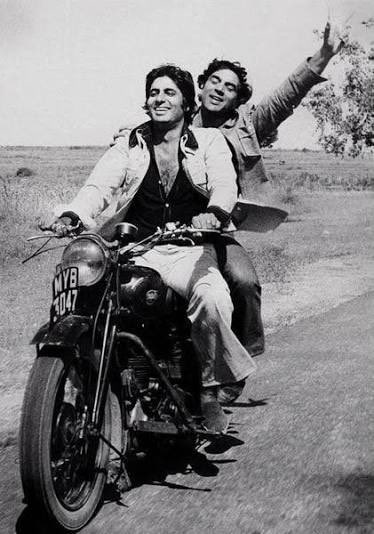
As Veeru, the loyal, fun-loving dacoit, Dharmendra stole hearts with his bromance with Amitabh’s Jai. The “Yeh dosti hum nahi todenge” sequence remains Indian cinema’s ultimate ode to friendship. Fadnavis echoed this: “Like Veeru in Sholay, he stood for true friendship in real life too.”
- Sholay (1975): Veeru – The unbreakable bond with Jai
- Chupke Chupke (1975): Hilarious professor in a comedy classic
- Dharam Veer (1977): Dual role as warrior brothers – action-packed hit
- Satyakam (1969): Idealistic patriot – his dramatic peak
Through the 1980s and ’90s, Dharmendra balanced family dramas like Betaab and The Burning Train with villainous turns in Batwara. He even won a Filmfare Lifetime Achievement Award in 1999 for his contributions.
Personal Life: A Family of Stars
Dharmendra’s off-screen life was as colorful as his roles. Married to Prakash Kaur since 1954, he had sons Sunny and Bobby Deol – both Bollywood actors. His high-profile second marriage to Hema Malini in 1980 produced Esha and Ahana Deol, creating a blended family of talent.
Despite controversies, Dharmendra remained grounded. He was a devout Sikh, often visiting the Golden Temple, and supported causes like farmer welfare. His love for poetry and horses added depth to the “He-Man” image.
Fadnavis’ Full Tribute: A Leader’s Admiration
In his statement, the Chief Minister said: “Dharmendra enacted roles in over 300 films, leaving a lasting imprint. From Satyakam to Sholay, his performances were mass favorites. He will always remain in the hearts of film enthusiasts.”
Fadnavis offered condolences to the Deol family: “I pray they find strength in this difficult time.”
Dharmendra’s Lasting Impact on Cinema
Dharmendra didn’t just act – he shaped Bollywood. He bridged the gap between black-and-white classics and color blockbusters, inspiring stars like Salman Khan (who called him “the real He-Man”) and Shah Rukh Khan (his “favorite co-star”).
His films grossed billions (adjusted for inflation) and influenced action tropes worldwide. Today, remakes like Sholay 3D keep his legacy alive.
As Fadnavis beautifully put it, Dharmendra “ruled Indian cinema with hard work and redefined the hero.” From Punjab’s fields to Mumbai’s lights, he proved dreams come true with grit and grace.
Rest in peace, Dharam ji. Your dialogues, dances, and daring stunts will echo forever. Bollywood’s He-Man lives on in every heart you touched.
Virat Kohli and Rohit Sharma’s ODI Future: BCCI VP Rajiv Shukla Slams Farewell Rumors
About the Author