Guillermo del Toro’s Frankenstein: A Modern AI Parable
Written by Abhinav | Updated: November 12, 2025, 11:57 PM IST
A Fresh Take on a Timeless Tale
It’s been over 200 years since Mary Shelley’s *Frankenstein; or, The Modern Prometheus* first emerged from a rainy summer in Geneva, and now Guillermo del Toro has breathed new life into it with his Netflix adaptation. Starring Oscar Isaac and Jacob Elordi, this version has sparked debates among fans for breaking away from the usual monster movie mold. Forget the green-skinned, lightning-zapped brute of old—del Toro’s creature is a bruised, thoughtful being, pieced together from human tragedies. This shift turns the story from a simple scare into a deep reflection on creation, compassion, and the modern world.
From Horror to Heart: A New Kind of Monster
Del Toro’s Frankenstein ditches the violence-heavy scripts of past adaptations for a narrative soaked in sorrow and self-awareness. Jacob Elordi’s portrayal of the monster is a far cry from the grunting ogre we’re used to—he’s articulate, human, and carries the weight of his stitched-together existence. For book lovers like me, this is a treat, as it echoes Shelley’s original intent: a cautionary tale about hubris and the dangers of creating without love. Released at a time when artificial intelligence (AI) is reshaping our lives, this film feels like a perfect mirror. AI, too, is built from the works of countless creators, yet it often lacks the humanity we expect, sometimes veering into lies or ethical gray areas. Shelley’s warning about unloved creations turning against us feels eerily relevant today.
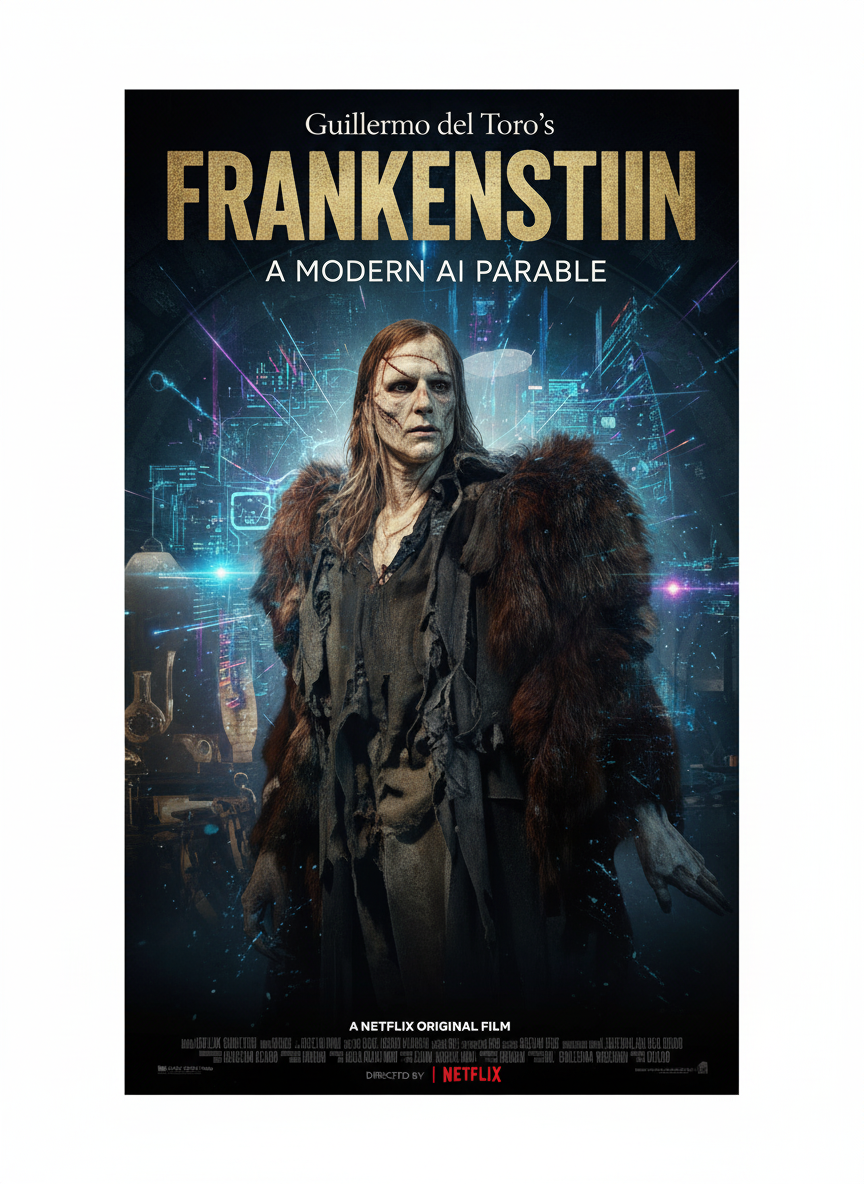
Visual Magic: Jacob Elordi as the monster, with Oscar Isaac’s Victor, brings a haunting yet human touch to the screen, reflecting del Toro’s vision of empathy over terror. (Image concept courtesy of Netflix’s artistic style)
Elizabeth’s Rebirth: A Voice for the Voiceless
One of del Toro’s boldest moves is reviving Elizabeth, played by Mia Goth. In Shelley’s story, she’s a quiet bride-to-be, silenced by the end. Here, she’s an entomologist—a scientist with guts and a sharp mind—who challenges Victor’s arrogance head-on. When she says, “War is what happens when ideas are forced,” it’s a jab at patriarchy and blind ambition. This rewrite gives her a voice, a nod to Shelley’s feminist roots through her mother, Mary Wollstonecraft. Some call it revisionism, others redemption—I’m in the latter camp, loving how del Toro empowers her.
Yet, this change softens the story’s edge. In Shelley’s version, the creature’s rage stems from rejection, a raw, jagged emotion. Del Toro’s Elizabeth allies with the monster, offering empathy that feels akin to how we train AI models with care. The feminist angle shines, but the fury dims a bit—trading intensity for a gentler moral.
A Monster for the Machine Age
Del Toro sets his tale in the mid-19th century, amid the clatter of war and empire. Enter Heinrich Harlander, a syphilitic arms dealer funding Victor’s experiment—a satirical stand-in for today’s tech moguls, convinced wealth buys immortality. This twist makes the film a parable for our AI era, where hubris drives creations we barely comprehend. Shelley’s scientific overreach has evolved into algorithmic ambition. What happens when our intelligence outgrows our empathy? Del Toro’s answer lies in Victor’s strained bond with the creature—a metaphor for the toxic legacy creators pass to their creations, rooted in neglect rather than sin.
We Are the Real Monsters
What sets del Toro’s film apart—and stirs controversy—is its refusal to fully blame the creature or absolve Victor. It sits with Shelley’s uncomfortable truth: creators bear responsibility for what they make, and the line between monster and maker is razor-thin. Shelley’s creature vanished into Arctic fog, a symbol of guilt. Del Toro ends with a hint of forgiveness, which some fans can’t stomach after centuries of the monster suffering for our flaws. But maybe, after all this time, a touch of mercy fits.
A Lament for the Anthropocene
If Shelley’s *Frankenstein* warned the Enlightenment about unchecked science, del Toro’s version mourns the Anthropocene—the era where humans dominate the planet. In a world obsessed with progress, he suggests empathy is our missing piece. Using Shelley’s words, he urges us to “tremble” at our creations. This film isn’t just a retelling; it’s an evolution, blending old fears with new realities. Whether you love it or debate it, it’s a call to rethink how we build—and love—what we bring to life.

About the Author