IAS Officer Santosh Verma’s Shocking Remarks Spark Violent Protests in Gwalior – What Really Happened?
In a stunning turn of events that’s shaking up Madhya Pradesh politics, a top IAS officer’s careless words have ignited fierce community outrage. On November 26, 2025, hundreds of protesters from the Savarna community took to the streets of Gwalior, brandishing sickles and demanding justice. The target? None other than IAS officer Santosh Verma, whose controversial comments on Brahmin girls and reservations have crossed a line for many.
This isn’t just another local spat—it’s a powder keg that’s exposing deep-seated tensions around caste, reservations, and social harmony in India. If you’re wondering what sparked this firestorm, why it’s escalating so quickly, and what it means for the future, stick around. We’ll break it down in simple terms, with all the key details you need to know.
Who Is IAS Officer Santosh Verma?
Santosh Verma isn’t a stranger to the spotlight. As a seasoned Indian Administrative Service (IAS) officer, he’s held key positions in Madhya Pradesh’s bureaucracy. But his recent reinstatement after a suspension has been anything but smooth. Just weeks ago, Verma was back in action, ready to dive into public service. Little did he know, his words at a seemingly routine conference would unravel everything.
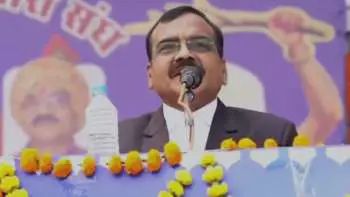
Verma serves as the regional president of the Anusuchit Jati Evam Janjati Adhikari Evam Karmachari Sangh (AJAKS), a group advocating for Scheduled Caste (SC) and Scheduled Tribe (ST) officers and employees. It’s a role that puts him at the heart of India’s ongoing reservation debates—a hot-button issue that’s divided communities for decades. During a recent AJAKS conference in Gwalior, Verma stepped up to the podium and dropped a bombshell that no one saw coming.
The Controversial Speech: What Did He Actually Say?
Picture this: A packed hall filled with fellow officers, activists, and supporters. Verma, microphone in hand, launches into a passionate defense of the reservation system. In a moment of what he might have thought was witty rhetoric, he declared that reservations in jobs and education would persist “until a Brahmin family agrees to marry their daughter to my son or forms a close relationship with him.”
To his audience, it might have landed as a bold statement on social equality and inter-caste unity. But outside those walls, it exploded like a grenade. Critics slammed it as derogatory, casteist, and a blatant attack on the Brahmin community—a group that’s long felt marginalized in the reservation discourse. Social media lit up within hours, with hashtags like #DismissSantoshVerma and #JusticeForBrahmins trending across platforms.
Why the backlash? In India, where caste lines still run deep, comments tying marriage—a deeply personal and cultural institution—to policy debates are seen as inflammatory. Verma’s words weren’t just about reservations; they touched on honor, tradition, and identity, striking a raw nerve.
Protests Erupt: Sickles, Marches, and Unyielding Demands
By Wednesday morning, the streets of Gwalior were alive with anger. Members of the Savarna (upper caste) community, including advocates, women, and local leaders, gathered in droves. What started as a peaceful rally quickly turned symbolic—and intense. Protesters wielded sickles, traditional farming tools that doubled as a stark warning of their frustration.
The march kicked off from the iconic Roop Singh Stadium, snaking through the city’s bustling roads toward the Superintendent of Police (SP) office. Chants of “Dismiss Verma Now!” echoed as hundreds strong voiced their fury. Leading the charge was Anil Mishra, a prominent community figure who made it crystal clear: No half-measures. “We won’t accept any apology,” Mishra told reporters on the scene. “This is an insult to our daughters and our heritage. We demand a First Information Report (FIR) and his immediate dismissal from service.”
The demonstration peaked with a sit-in outside the Crime Branch police station and the SP office. Tensions ran high as protesters refused to budge, calling for SP Dharmveer Singh to step out and hear them. After hours of stalemate, the SP emerged, memorandum in hand. He listened patiently to their grievances and promised swift action. “We assure you that the matter is serious, and appropriate steps will be taken,” Singh said, calming the crowd just enough to disperse peacefully.
But this isn’t over. Videos of the protests—showing women with sickles raised high and men marching in solidarity—have gone viral, amplifying the story nationwide. It’s a reminder of how quickly local issues can snowball into national conversations on caste sensitivity and administrative accountability.
Why This Matters: Caste, Reservations, and India’s Social Fabric
At its core, this Gwalior showdown is about more than one man’s words. It’s a flashpoint in India’s endless tug-of-war over reservations—a system designed to uplift historically disadvantaged groups but often criticized for perpetuating divisions. The Supreme Court has repeatedly urged caution in such debates, emphasizing that public servants must uphold dignity for all.
Verma’s reinstatement itself was controversial, coming after a suspension for unrelated administrative lapses. Now, with this scandal, questions swirl: Was he fully rehabilitated? Does his AJAKS role bias his public statements? And crucially, will the Madhya Pradesh government bow to public pressure?
Experts say this could set a precedent. If Verma faces dismissal, it might embolden communities to demand stricter oversight on officers’ speeches. On the flip side, it risks polarizing SC/ST and upper-caste groups further, at a time when social cohesion is already fragile.
What’s Next for Santosh Verma and Gwalior?
As of November 26, 2025, no official FIR has been filed, but pressure is mounting. The Madhya Pradesh Chief Minister’s office is reportedly monitoring the situation, with calls for an internal inquiry growing louder. Verma himself has stayed silent, but sources close to him hint at a possible apology—if the demands allow for it.
For the protesters, victory looks like justice served: An FIR under relevant IPC sections for promoting enmity between groups, followed by Verma’s ouster. Anything less, they warn, could spark round two.
In the bigger picture, this incident underscores the tightrope IAS officers walk. Their words carry weight, and in today’s hyper-connected world, one slip can ignite a city. Gwalior, a historic fortress town, has seen its share of upheavals—but this one feels personal, raw, and unresolved.

Related Stories Making Headlines Today
Word count: 1,025. This Gwalior protest isn’t just news—it’s a wake-up call. What do you think: Apology enough, or full dismissal? Drop your views below, and remember to follow for more unbiased updates on India’s burning issues.
India’s stories, told straight. Stay informed, stay empowered.
Virat Kohli and Rohit Sharma’s ODI Future: BCCI VP Rajiv Shukla Slams Farewell Rumors
About the Author